
#249: Both are better
Notes on year 2 of motherhood + a Maybe Baby sale

It’s 11:45pm. My friend and I are on our way home from dinner, hugging a subway pole in our coats. We are breathlessly discussing the topics we have yet to cover (the evils of Hollywood, the email she got yesterday, etc.), the night nearly over. Privately, I am also doing what Avi calls my “sleep math”: running and rerunning calculations of how much sleep I might get before Sunny wakes up at 6:30am (as always, the answer is neither encouraging nor useful). Then my friend surprises me with a demand: “I need you to talk me out of having a baby,” she says, apropos of nothing, “because I’ve been wanting one really bad lately.”
We drill into the second part right away and I never talk her in or out of anything. That is, until I get home, at which point I resume the conversation in my head. When I creep into my dark apartment like a burglar and hear a piercing cry, I talk her out of it. Then, moments later, when I head toward the nursery, thrilled at the mere thought of cupping Sunny’s face, I talk her into it. When, 45 minutes later, I’m snuggled in my bed, nearly asleep, and another wail sends dread plummeting through my viscera, I talk her back out of it. And when I’m sitting in a rocking chair at two in the morning, Sunny’s warm body breathing slowly against mine, the seam of the dark strange night unzipped just for us, I tell her, finally, that there’s nothing quite like this.
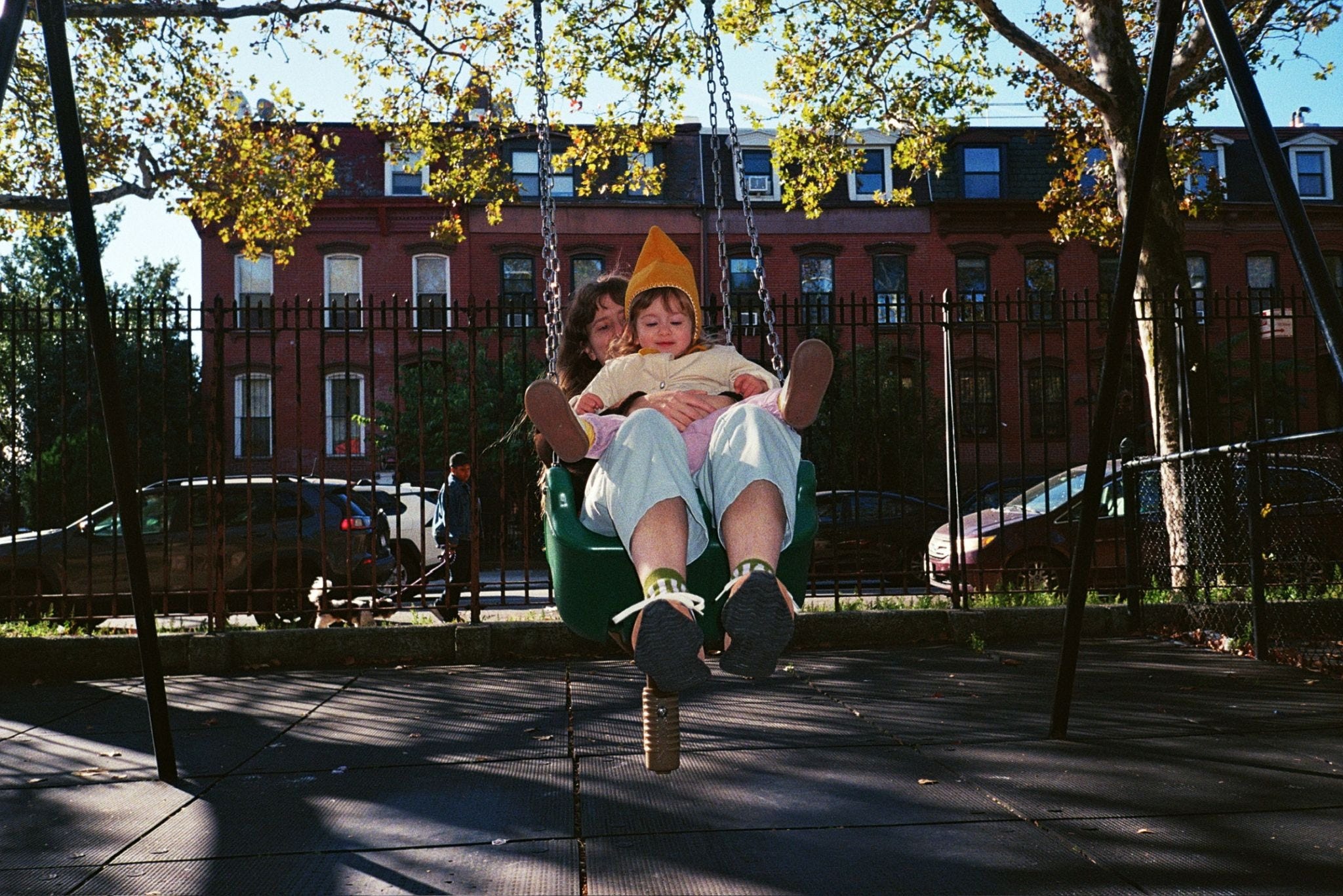
What I don’t like to admit about my second year of motherhood, which I completed in November, is how much my experience was defined by ambivalence. The wish-washy word, at first blush, does not feel suitable. I’m not unclear on how I feel about my choice to have a child; I’m devastated to imagine never having done it. But strictly speaking, ambivalent is precisely the word two years in, because my feelings on the experience of motherhood do not add up to a tidy conclusion in the positive or the negative, but in a miles-long bracket that includes every possible feeling.
Year Two was emotionally on par with running back and forth between a hot tub and an ice bath, then strangely getting used to that. Tangibly, it was about resources: time, sleep, energy, wherewithal. Mostly a catastrophic lack of them, occasionally a euphoric savoring. Year Two was about turning into a pull toy who supplied one of three phrases, always delivered with the full force of authenticity: “Oh my god I’m so tired,” “Oh my god she’s incredible,” “Oh my god the mess.” In a spiritual sense, it was about trying to discuss a conflict I was having with a loved one about the wedge my child had driven between us, but never being able to finish the conversation, due to my child.
As Hannah Black so aptly put it, “[W]hatever I could say about parenting is trapped in the soundproof box of cliché.” Such as: It’s impossibly hard but rapturously sweet! (Oh shut up.) If Year One was about resenting the banality of such a statement, Year Two was about it invading every single one of my cells such that I had nothing left to resent: There was no longer any distance between me and the statement. It was simply reality.
Anointment
This year brought about other paradigm shifts. I’ve been thinking about an email my friend sent me in the spring of 2023. She was congratulating me on being pregnant and telling me that, despite hating her own pregnancies, now she kind of missed them. “I loved how special it was,” she wrote, “which is a weird word, but I really did feel, like, anointed in some way? Uniquely powerful and just apart, somehow, from the rest of the world.”
I think about her use of the word anointed a lot. It knocks around in my head. And it was true, I felt like that—not more important than anyone else, but like I was living in a state of reverence. Like I was maxing out on my human potential to make meaning. That by going through gestation and birth and making so much milk and blood, I was in touch with something primordial and significant: common yes, but extraordinary. Of course I couldn’t answer all my texts!
One of the challenges of Year Two was the shimmer of anointment wearing off. If at first it was shocking that I ever answered texts, eventually it became merely understandable if I didn’t. That shift is subtle—it’s a textural change, but I felt it all the time.
During Year One, the stakes of parenthood seemed to transform every day, every minute. This was an unsustainable, supercharged way to live. In Year Two, the changes came steadily but imperceptibly. The days stretched on and then seemed to repeat themselves. The moments comprising these days still felt urgent and precious to me. I felt my love for Sunny transform from instinctual to specific—I laughed with her, was surprised by her, could sit next to her on a bench and request a single Cheerio (and have that request granted). But I knew these moments held less dramatic appeal to those less directly involved. Where was the blood? The milk? The weeping in fast-food restaurants and the days spoiled by singular forks?
In Year Two, the drama was buried under layers of the everyday, except when it wasn’t: a blood-drenched night in the hospital, Sunny’s baby teeth permanently mangled, but that felt untranslatable in a different way. A horror without the poetry of consecration. A thing we could only manage to explain once, then re-experience relentlessly through flashbacks.
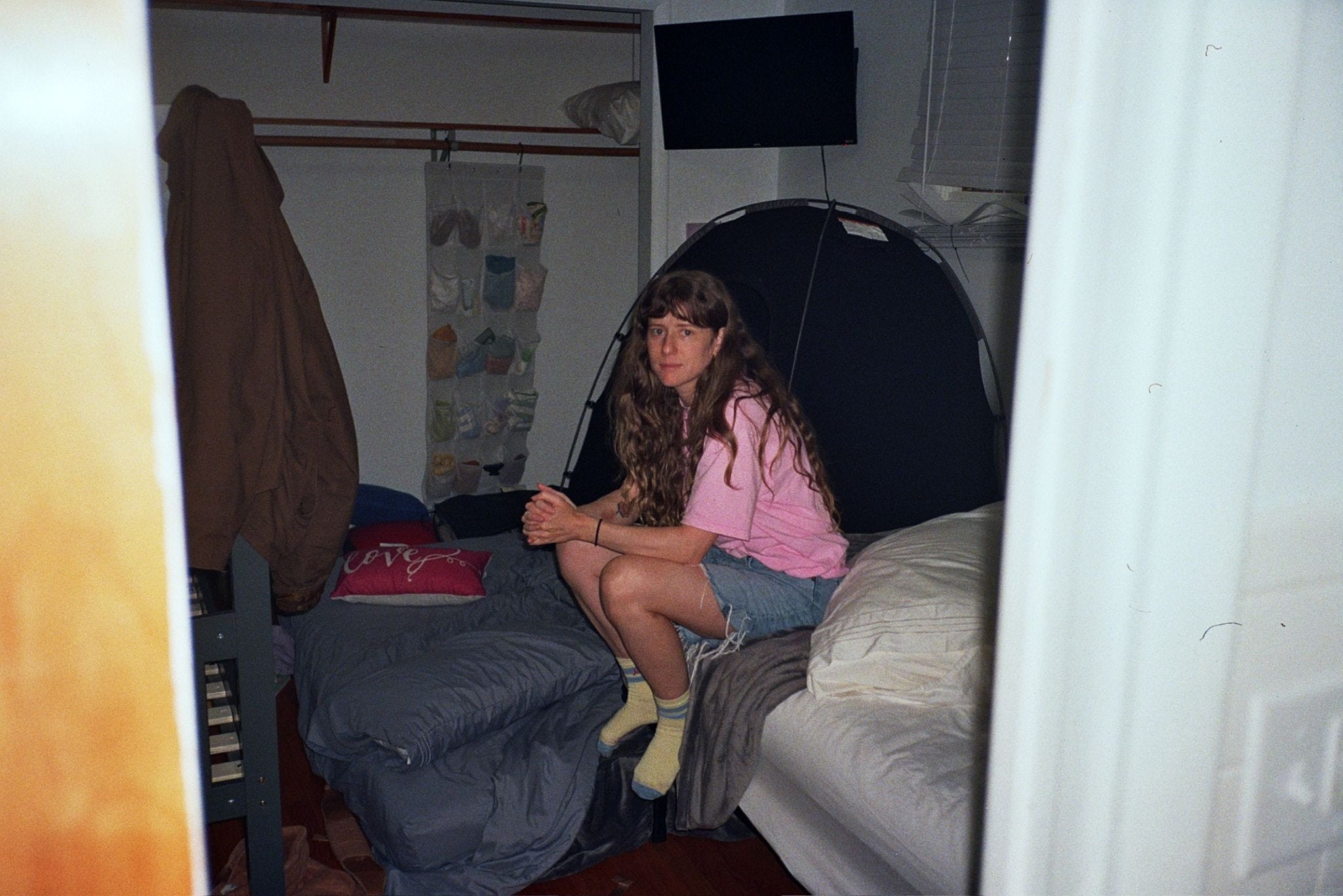
More often, the drama played out in our apartment, while doing ordinary things. Consider the fact that over the past 48 hours, I’ve paused writing this essay several times because Sunny threw up, developed a croup cough, spiked five fevers, spent two nights waking up every hour sobbing, lost her voice and couldn’t tell us what was wrong, got rushed to urgent care due to low oxygen. I could expand each of these details into a tale rife with spectacle, heartbreak, simmering tensions, and states of grace, but ultimately it’s just a cold. One of the 15 or so Sunny will catch over the next year. Urgent care sent her home.
If it were possible to make recurrent low-grade sickness into interesting subject matter, if I could write a whole essay about how it felt just now, when a feverish, messy-haired, Sunny peeked around the corner and smiled conspiratorially at me in her twisted pajamas, I’d have found this past year incredibly creatively fertile.
Instead, I tended toward accepting—either in earnest or as a coping mechanism—that some things are better lived than captured. If Year One was about marveling at the pure density of the parenthood experience, about clawing desperately toward communicating it, Year Two was about losing interest in translation: the freedom of that, and also, sometimes, the loneliness.
Supporting characters
Avi and I spent this year promising to take better care of ourselves. To start exercising, to start alternating mornings to get more time on our own, to jumpstart our languishing hobbies. This planning is still in process—ongoing, actually, for the past 12 months.
We’ve done some things well, especially those connected to being parents, like tending to our home life and community. Anything one might consider “extracurricular personal development” has become a punchline: Tomorrow, definitely! “The only way I can develop now is through much harder, more continuous, connected work than my present life makes possible,” wrote Adrienne Rich in her journal in 19581, two years after giving birth to her first child. And three years after that: “A blissful love for my children engulfs me from time to time and seems almost to suffice.”
There’s a tragic comedy to these lines, with their cocktail of optimism and defeat. All I need to do now is something my life can’t accommodate. The overwhelming beauty in my life is almost enough. I don’t relate to the rage fueling Rich’s journal entries (the stakes of midcentury motherhood were entirely different and I’m very lucky), but I relate to the tensions that animated them. I recognize the recurrent cycle in which self-sacrifice becomes the end—something inevitable, almost compulsive—rather than the means.
It’s been refreshing in some ways to no longer feel like the main character in my life, but it has its downsides. The main character pulls focus, requires tending.
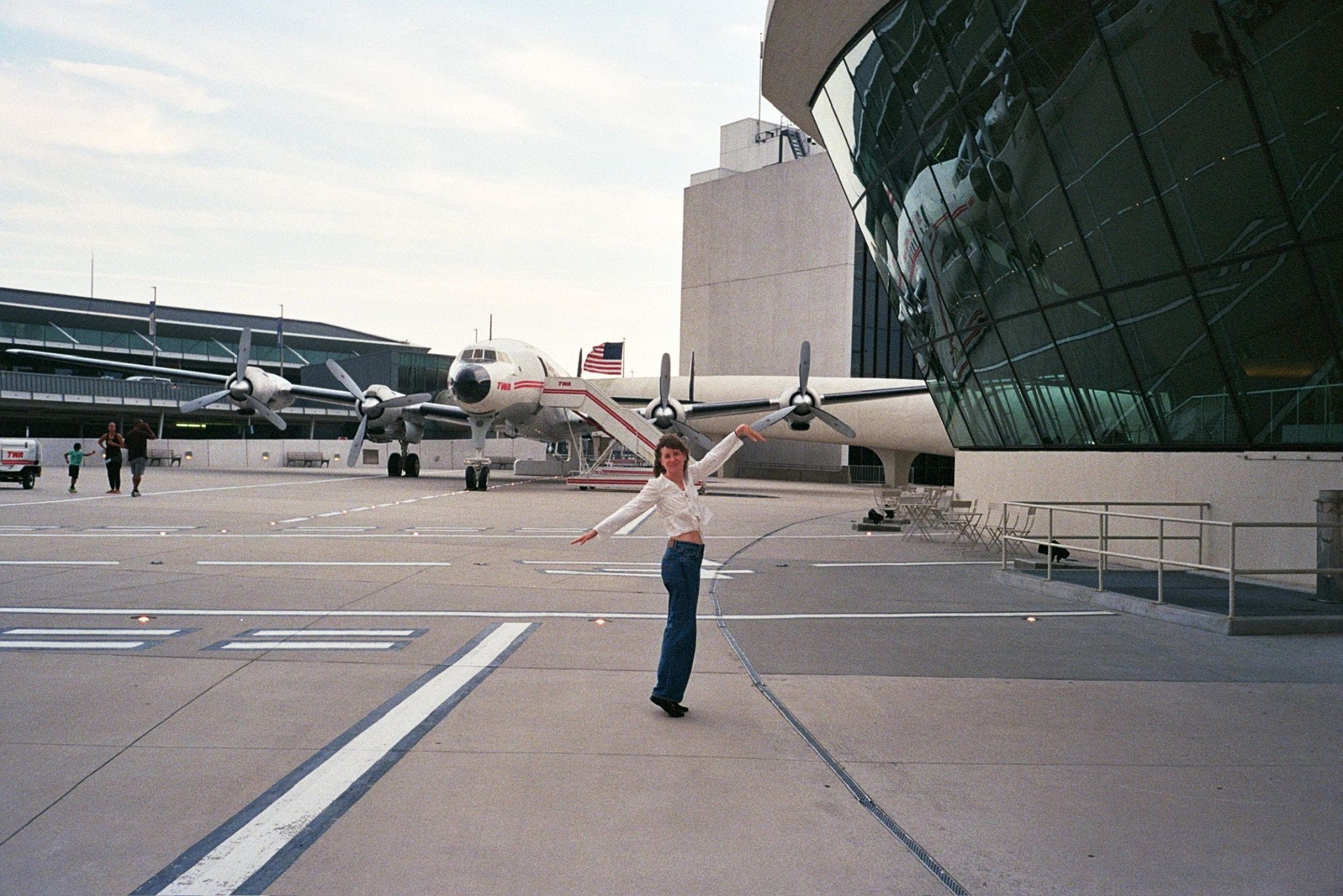
There was an evening early in my pregnancy when I had a good cry about the chapter that was closing on my independent adult life. It was a euphoric, self-indulgent cry, a way of honoring something I felt receding. I remember a particular image running through my head, of me riding a train by myself, heading somewhere exciting. I can’t say what inspired that image but, in hindsight, it was the right one to mourn. I rarely feel important on trains anymore. A funny thought since, objectively speaking, I’ve never in my life been important on a train. But you know what I mean: No one cares when a supporting character rides the train.
Both are better
One of the things I did during Year Two, against seemingly all odds, was read Anna Karenina. There’s a tiny, inconsequential scene when Levin and Kitty, a married couple, are discussing whether it’s better in the summer, when their house is lively and full of visitors, or in the winter, when it’s quiet and peaceful, and Levin says—and I haven’t stopped thinking about these words for months—“Both are better.”
Should my friend have a baby? Yes. Should she not? Yes. My life is overwhelmed by structure and responsibility, by stunned joy and tenderness. How freeing to never wonder what I should do or how to meaningfully spend my time. How limiting to always know what most deserves my attention, running sleep math on the train. Being the main character is lovely; it’s a relief to step aside.
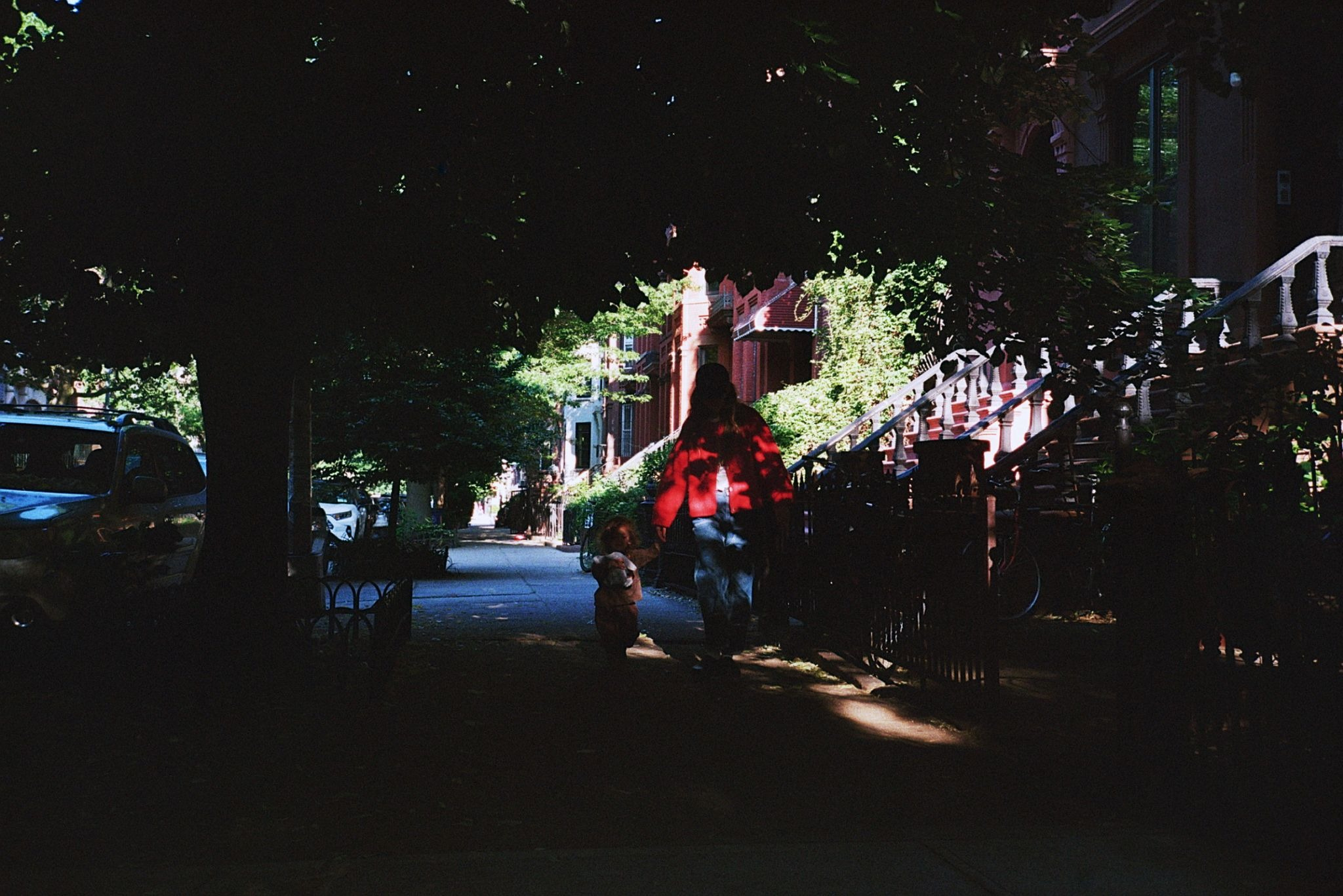
Over Thanksgiving, my sister was teaching me Mahjong when Sunny woke up from her nap, crying desperately for me. Moments before, the house had felt cozy and quiet, blanketed in a lazy tranquility that might have lasted for hours—let’s play another round, then another, should we make a drink, did you hear what happened to so and so? Instead the game screeched to a halt, I missed my winning turn, and spent the next 30 minutes trying to soothe Sunny, this red-cheeked whirling dervish who, the night before, made everyone at the dinner table laugh hysterically.
Ambivalence used to feel like a dirty word to me. Proof of a flaccid spirit. Maybe even proof of cynicism. These days, it feels to me like a kind of optimism. An understanding that deciding between two arguably superior paths, rather than suggesting the highest stakes, can also, in another sense, signal the lowest: a rich life awaits you either way. There is beauty and a little terror in wide-open afternoons, in the familiar space between my searching face and Sunny’s. What a windfall, then, to discover: Both are better.

Thank you for so much reading this year. This was my last essay of 2025. Next week I’ll be introducing the new Maybe Baby archive (!) and reflecting (via link) on this year of newsletter-writing. If you’d like to become a paying subscriber, I’d be so grateful for your support.
There’s good reason to spring for it now: I’m running a sale through the end of the year: 25% off an annual subscription. That’s a one-time $45 payment for a year of paid perks, which include my weekly rec list and podcast, my monthly advice column, and my extremely famous advice podcast with my insane friend (who all the listeners want to sleep with!): Dear Danny. Claim it here:
25% off one year of Maybe Baby
You’ll also gain the ability to leave and read comments on all my newsletters (huge, best commenters in the biz).
Thanks again and I hope you have a nice Sunday,
Haley
As published in Of Women Born
This is gorgeous and so accurate. Reminds me of a poem called Culpable by Joy Sullivan that helped me through my ambivalence on whether or not to have a second kid. Here’s a piece:
“I wrote a pep talk recently to myself on a bar napkin: no matter
which road you take, it will be both glorious and unbearable. Every
road is lonely. Every road, holy. The only error is not walking forth.
Yesterday, a friend in California, when giving me directions, told
me I could take the trail toward the tall pines or turn left and find
a field of poppies, growing gold and savage at the edge of the valley.
When I asked which to choose, she simply shrugged and said:
either way, it’s all heaven.”
(Both are better.)
What a brilliant essay - you get it just right, the fact that the impossible hardness of it and the sweetness just become reality. I'm sitting here reading it feeding my 6-month-old daughter while my 2-year-old son is in another room dismantling the vacuum cleaner (as far as I can tell?!). I finished writing a novel in the past two years, and people ask how did I do it - but it was my sanity! It was my secret life and my freedom - and it's def clear from your piece that you understand what it's like to need those things, as a new mum!